

The Role of Electrophoretic Paint Curing Agent
In the world of industrial coatings, electrophoretic paint stands out for its excellent adhesion, corrosion resistance, and smooth, uniform finish. It is widely used in industries ranging from automotive manufacturing to household appliance production. However, the final quality and performance of the electrophoretic paint coating heavily depend on a crucial component: the curing agent. But what exactly is the role of this seemingly small but mighty ingredient?
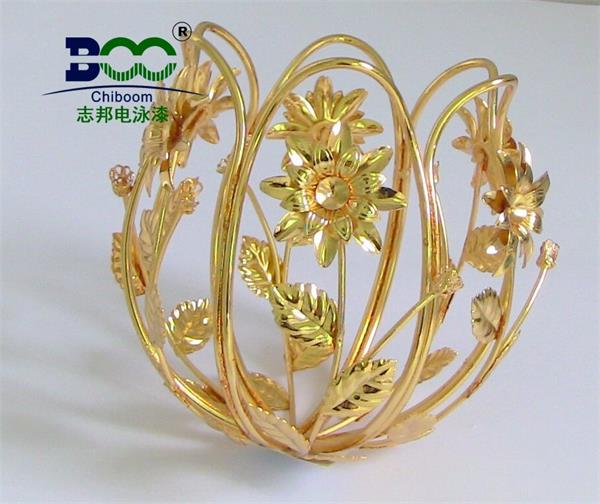
At its core, the curing agent in electrophoretic paint acts as a catalyst that triggers a chemical reaction, transforming the liquid paint into a solid, durable film. This process, known as cross-linking, is fundamental to the formation of a high-performance coating. When the electrophoretic paint is applied to a substrate and then heated, the curing agent reacts with the resin components in the paint, creating a network of chemical bonds. This network, or cross-linked structure, is what gives the final coating its remarkable properties.
One of the primary functions of the curing agent is to enhance the mechanical strength of the paint film. By forming these cross-links, the curing agent significantly increases the hardness and toughness of the coating. This means that the painted surface becomes more resistant to scratches, impacts, and abrasion. For example, in the automotive industry, vehicles are exposed to various harsh conditions, including road debris and weather extremes. A curing agent ensures that the electrophoretic paint can withstand these challenges, maintaining the vehicle’s appearance and integrity over time.
Beyond mechanical strength, the curing agent also plays a vital role in improving the chemical resistance of the coating. The cross-linked structure created by the curing agent acts as a barrier, protecting the underlying substrate from corrosive substances such as acids, oils, and solvents. This is particularly important in applications where the coated products are exposed to industrial environments or harsh chemicals. For instance, electrophoretic paint with an effective curing agent is commonly used in the production of industrial machinery and equipment, where resistance to chemical attack is essential for longevity.
Another significant contribution of the curing agent is its impact on the aesthetic qualities of the coating. A well-cured electrophoretic paint film tends to be smoother and more uniform, with enhanced gloss and color retention. The curing agent helps to eliminate imperfections and ensures that the paint dries evenly, resulting in a visually appealing finish. This is especially critical in consumer-facing products like appliances and furniture, where appearance is a key selling point.
Moreover, the curing agent can influence the curing process itself, allowing for greater flexibility in manufacturing. Different types of curing agents can be formulated to enable curing at various temperatures and times, accommodating different production requirements. Some advanced curing agents even allow for lower-temperature curing, which can save energy and reduce production costs while still achieving excellent coating performance.
In summary, the curing agent in electrophoretic paint is far more than just an additive; it is a cornerstone of the coating’s performance. It enhances mechanical strength, improves chemical resistance, refines aesthetic qualities, and offers flexibility in the curing process. Without a high-quality curing agent, the benefits of electrophoretic paint would be significantly diminished. As technology advances, researchers continue to develop new and improved curing agents that push the boundaries of what electrophoretic coatings can achieve, ensuring that they remain a preferred choice in countless industrial applications.


 WeChat