

Will Electrophoretic Paint Rust?
Electrophoretic paint, as a widely used technology in metal surface treatment, is renowned for its excellent corrosion resistance, adhesion, and decorative properties. However, in practical applications, a question often arises: will electrophoretic paint rust? To answer this question, we need to analyze the principle, characteristics of electrophoretic paint, and the factors that affect its anti-corrosion performance.
First, let’s understand the basic principle of electrophoretic paint. Electrophoretic paint, also known as electrophoretic coating, is a painting method that uses an electric field to deposit paint particles onto the surface of a workpiece. In this process, the workpiece serves as the anode (or cathode), and the paint tank serves as the cathode (or anode). Through the action of a direct current electric field, the resin and pigment particles in the paint form a uniform coating film on the surface of the workpiece. This coating film has good adhesion and corrosion resistance, effectively preventing the metal surface from contacting the external environment, thus playing a rust-proof role.
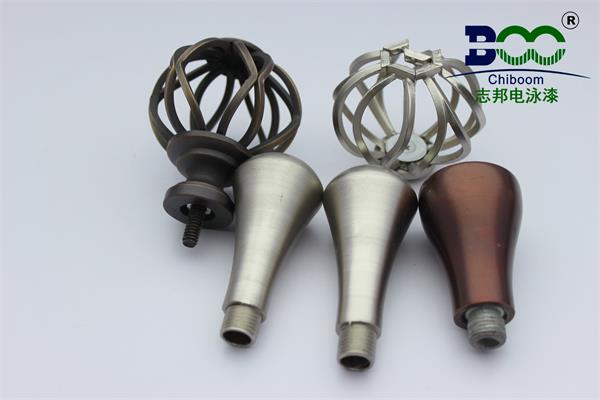
Then, will the electrophoretic paint itself rust? From a chemical composition perspective, electrophoretic paint mainly consists of resins, pigments, solvents, and additives, which themselves do not have the conditions to rust. Rusting is the result of a chemical reaction between the metal surface and oxygen and water, while electrophoretic paint, as an organic coating, does not contain metal components that easily react with oxygen and water. Therefore, electrophoretic paint itself will not rust.
However, this does not mean that a workpiece coated with electrophoretic paint will never rust. The anti-corrosion performance of electrophoretic paint mainly depends on the following aspects:
Coating Integrity: The integrity of the electrophoretic paint coating is crucial to ensuring its anti-corrosion performance. Any scratches, cracks, or pores in the coating film may allow moisture and oxygen to penetrate to the metal surface, thus increasing the risk of rusting. Therefore, in the actual production process, it is necessary to strictly control the painting process to ensure the integrity of the coating film.
Coating Thickness: Coating thickness is also an important factor affecting its anti-corrosion performance. Generally speaking, the thicker the coating, the better its anti-corrosion performance. However, an excessively thick coating can also lead to a decrease in the mechanical properties of the coating, making it prone to cracking and peeling. Therefore, it is necessary to select an appropriate coating thickness based on actual needs.
Quality of Pretreatment: Pretreatment is a very important link in the electrophoretic coating process, mainly including degreasing, derusting, and phosphating steps. The quality of pretreatment directly affects the adhesion and anti-corrosion performance of the electrophoretic paint. If the pretreatment is not thorough, and there are impurities such as oil and rust on the metal surface, it will lead to a decrease in the adhesion of the electrophoretic paint, thus affecting its anti-corrosion performance.
Environmental Factors: Environmental factors are also important factors affecting the anti-corrosion performance of electrophoretic paint. For example, in harsh environments such as high temperature, high humidity, and salt spray, the anti-corrosion performance of electrophoretic paint will be challenged to a certain extent. Therefore, when selecting electrophoretic paint, it is necessary to choose the appropriate type of paint and painting process based on the actual use environment.
In conclusion, electrophoretic paint itself will not rust, but its anti-corrosion performance is affected by many factors. In practical applications, it is necessary to strictly control the painting process to ensure the integrity, thickness, and adhesion of the coating film. At the same time, it is necessary to select appropriate pretreatment processes and paint types to give full play to the anti-corrosion performance of electrophoretic paint. In addition, it is necessary to take corresponding protective measures based on the actual use environment to extend the service life of the workpiece.


 WeChat