

What Should the Current of Electrophoretic Paint Be? This Article Will Clarify It for You
In the electrophoretic coating process, controlling the current size of electrophoretic paint is a crucial step, as it directly affects the quality and performance of the paint film. If the current is set improperly, various problems such as too thin or too thick paint film, roughness, and pinholes may occur, impacting the appearance and protective effect of the product. So, what should the current of electrophoretic paint be? This is not a simple number but is influenced by multiple factors.
The type of electrophoretic paint is a key factor in determining the current size. Different types of electrophoretic paint have varying molecular structures and charge characteristics, leading to different responses to current. For example, cathodic electrophoretic paint and anodic electrophoretic paint have different operating voltage ranges. Cathodic electrophoretic paint typically operates at 200 - 350V, while anodic electrophoretic paint operates at 50 - 250V. This is because the chemical reactions and deposition mechanisms during the electrophoretic process of cathodic and anodic electrophoretic paint are different, requiring different voltages and currents to ensure good coating effects.
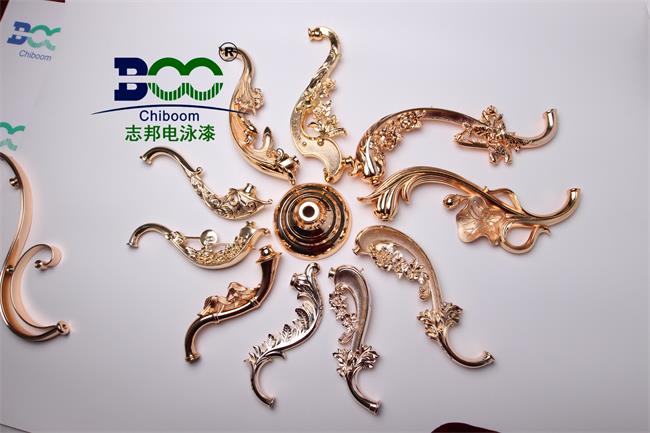
The surface area and shape complexity of the workpiece to be coated also cannot be ignored. The larger the surface area of the workpiece, the more charge is needed during the electrophoretic process, and correspondingly, the larger the current. Moreover, for workpieces with complex shapes, such as those with deep holes, narrow slits, or uneven surfaces, the current distribution in these areas may be uneven during electrophoresis. To ensure a uniform paint film on the entire workpiece, the current size needs to be adjusted appropriately. Generally, for workpieces with large surface areas and complex shapes, the current should be increased to ensure the integrity and uniformity of the paint film.
The parameters of the electrophoretic bath solution also play a crucial role in determining the current size. The solid content, temperature, and pH value of the bath solution all affect the conductivity and migration speed of the electrophoretic paint. When the solid content of the bath solution is too high, the conductivity increases, and the migration speed accelerates. In this case, the current should be appropriately reduced to avoid excessively thick and rough paint films. Conversely, if the solid content of the bath solution is too low, the current needs to be increased to ensure sufficient paint film thickness. Changes in the bath solution temperature and pH value also affect the stability and mobility of the electrophoretic paint, thereby influencing the current setting.
In practical production, we can determine the appropriate current size through some calculation methods. For example, based on the definition of "coulombic efficiency," a certain amount of charge is required to coat a certain weight of film. Assuming that the required coating weight on the workpiece is p, and p = sδγ (where q is the "coulombic efficiency" of the electrophoretic paint, s is the surface area of the workpiece to be coated, δ is the thickness of the coating film, and γ is the dry film specific gravity of the electrophoretic paint film), we can roughly calculate the required charge and then deduce the appropriate current size based on the electrophoretic time.
In addition, the optimal current can be determined through actual production trials and adjustments. At the initial stage of production, an initial current value can be set first, and then the quality of the paint film can be observed. According to indicators such as the thickness, uniformity, and appearance of the paint film, the current size can be gradually adjusted until the most suitable current value for the current production conditions is found.
The selection of the current size of electrophoretic paintis a process that comprehensively considers multiple factors. In actual production, we need to reasonably determine the current size based on the type of electrophoretic paint, the characteristics of the workpiece, the parameters of the bath solution, and by combining theoretical calculations with actual trials to ensure the quality and effect of electrophoretic coating.


 WeChat